

295 results found with an empty search
- How Truly Significant Is the Collapse of the Silicon Valley Bank on the U.S. Economy?
Magazine Tuesday, December 23, 2025 00 °c Log In How Truly Significant Is the Collapse of the Silicon Valley Bank on the U.S. Economy? Magazine Share Songi Chai, Yubin Cho, Seohyun Jang, Dongha Kim, Jian Kim, Tyler Lafleur, Guyri Noh, Wieroo Park, Sieeun Rhee, Yujin Yang, Insun Yoon 2023/04/23 Works Cited > News 0 4/23/2023 The Silicon Valley Bank was once a largely successful company that provided banking and financing services for tech-related businesses and entrepreneurs. With the 2020’s pandemic-driven demand increase for digital services and electronics, many companies utilized SVB’s services such as payroll in order to hold their cash for business expenses. Subsequently, as banks typically do, the SVB invested many of these deposits. Most of these went towards government bonds, a debt-based investment where you loan money to the government to support its public spending funds–and one of the safest investments one can make. Unfortunately for the SVB, government bonds and interest rates have an inverse relationship–meaning when COVID-19 struck, the skyrocketing inflation rates led the government to raise interest rates, consequently decreasing the value of SVB’s bond portfolio. Moreover, the general decline in economic conditions critically affected tech companies and drove them to withdraw from their deposits. SVD didn’t have enough cash in hand and had no choice but to sell some of its bonds with big losses. Upon hearing this news, businesses started to line up in order to withdraw their money. Within 48 hours, the bank collapsed. Its collapse has had an immediate and far-reaching impact on the financial services it provides to its clients. Renowned technology companies that relied on SVB for essential financial services such as lending, cash management, and investment banking, are now struggling to find comparable alternatives, especially in the short term. Furthermore, as SVB played a critical role in financing innovative and high-growth technology companies, its failure has added challenges for these companies in securing the necessary financing to continue their innovation and growth. Given SVB's significant presence in the banking industry and its relationships with banks and financial institutions worldwide, its failure has reverberated on a global scale. The failure of SVB has led to the loss of confidence in the United States' ability to maintain its leadership in technology and finance. This raises questions amongst companies and governments about whether the U.S. is capable of sustaining its worldwide influence. Moreover, the SVB had been the base of half of U.S. venture-backed technology and healthcare companies, meaning that the fall of SVB is the same as numerous companies losing base financial sources to rent, invest and manage money. The finances of these companies have become unstable as they have to find an alternative service in the short term to secure their finances, which is very challenging. Moreover, SVB, as one of the biggest banks, had relationships with diverse banks and institutions, even governments globally, not only in the U.S.. As SVB was one of the main banks of the U.S.A, the fall of SVB led to lower confidence and trust in U.S. financial services internationally. Now, most companies are mainly focusing on other services than the U.S., while having the same struggle of finding a secure alternative financial service. Like this, the fall of SVB is causing a significant effect on the global economy, making it unstable and bringing challenges, especially in the area of financial security. Through a more political lens, now, in a time of particular political turmoil, people from all related professions, including but not limited to lawmakers, financial analysts, and political experts, are asserting their opinions on what policy responses must be made. The “blame game” has started as politicians are seeking to place blame on opposing parties and hold them responsible for a possible banking crisis. The Democrats are blaming the previous Trump administration for a 2018 deregulation which cleared grounds for bank failures; the Republicans, in particular Mr. DeSantis, the Governor of Florida, are calling SVB a “woke” bank, suggesting that their failure derived from their diversity, equity, and inclusion initiatives which distracted them, which ultimately lead to their collapse. The Federal Reserve is receiving criticism over the collapse of the SVB on why the central bank failed to stop the SVB from taking obviously dangerous risks. Regulators and lawmakers are calling into question how the central bank should oversee financial institutions. Meanwhile, the Biden administration has announced their intervention in the situation to avert a banking crisis and has assured SVB customers that all of their deposits, not just the amount covered by the FDIC, will be protected. Not only that, it could have a substantial impact on U.S. businesses as well, specifically the diversity of it. The loss of the bank will create a profound gap as founders of color are already far less likely to receive VC funding and small business loans. The tech industry will return to operations completely changed, with companies and VCs actively diversifying their assets and using multiple banking partners. The collapse of SVB will alter how VCs conduct due diligence, and startups will find it hard to take the risk of using a regional bank, which may lead to a shift towards larger banks. Since SVB has beneficially contributed to the growth of technology and was one of the biggest banks in the U.S. before, the causation of SVB's collapse can be questionable. Several years before now, SVB had invested billions of dollars in the government, when the interest rates were nearly zero. This was where everything started: the interest rates started to rise under the control of the Federal Reserve. As the interest rates were rising, the bond prices had fallen, and therefore, this impacted SVB’s bond portfolio to corrode its value. Since the SVB’s collapse, this has impacted other business developments. In the case of small banks, it is estimated that the small banks have lost at least 108 billion dollars in total. Moreover, the technology development and industries in the U.S., to which SVB was known for their large contribution, were negatively impacted by this incident: the U.S. losing trust in the maintenance of leadership in the technology field. Thus, the unexpected collapse of SVB has caused confusion in the U.S. business development, such as small banks, and technology fields (including finance). However, it's important to remember that the tech industry is notoriously resilient, and we've seen it bounce back from major setbacks before, such as the dot-com crash of the early 2000s. It's possible that new players could emerge to fill the void left by the Silicon Valley Bank, or existing financial institutions could step up to provide similar services. Robinson Review Favorites A Review of Alternative Bottleless Water Ooho Dongha Kim Three Reasons Why the U.S. Shot Down the Chinese Spy Balloon Seunghyeon Lee How Truly Significant Is the Collapse of the Silicon Valley Bank on the U.S. Economy? Songi Chai, Yubin Cho, Seohyun Jang.. Joe Biden's Signing of the Respect for Marriage Act Becomes A Turning Point in the Fight for LGBTQ+ Rights As the Birth Rate Issue Emerges in China, CNN’s Recent Report May Shine Light on a New Vision of Politics Seoun Kim The New Fossil Fuel: Lithium Yubin Cho Yubin Cho Magazine Trending on Robinson Review As Economic Growth Slows, Retail Sales in March Decreases Joe Biden's Signing of the Respect for Marriage Act Becomes A Turning Point in the Fight for LGBTQ+ Right Vaseline on Your Face? Four Tips That Others Don’t Know The Controversy Behind Netflix “Dahmer–Monster: The Jeffrey Dahmer Story” Robinson About Us Staff Events My account Popular sections Politics Economics Science Arts Other sections Opinion Magazine Games Contact Us Contact Us Social media Advertise With Us COOKIE PREFERENCES PRIVACY POLICY TERMS OF USE Markets data delayed by at least 15 minutes. © Robinson Review 2023. R and ‘Robinson Review’ are trademarks of Robinson Review. Robinson Review and its journalism are subject to a self-regulation regime under the Robinson Editorial Code of Practice.
- Imposter Syndrome
Business November 23, 2023 at 2:41:31 PM 00 °c Log In Business Imposter Syndrome Business 2023/12/12 Share Heyn Lee Lady Gaga, Michelle Obama, and Albert Einstein. What do they have in common? Their ingenious capabilities? Field-pioneering works? Extensive influence? Yes, yes, and yes. But above all, they may have felt like a fraud–a victim to this nagging doubt that their achievements were not really… theirs. All three figures were exceptionally smart, creative, and accomplished in their respective fields. However, the feeling of being a fraud or experiencing self-doubt about their achievements is not uncommon, even among highly successful individuals. People often find themselves questioning whether they truly deserved the recognition and success they received. This can affect people from all walks of life, regardless of their level of intelligence or creativity. Take a look at a typical story of someone experiencing this feeling. Sarah had always excelled in her career. She climbed the corporate ladder with confidence and competence, impressing her colleagues and superiors alike. Her journey was marked by one success after another, but it wasn't without its hidden challenges. As a marketing manager at a prestigious advertising agency, Sarah had faced various high-pressure situations, from launching successful campaigns to managing large teams. She had always been the go-to person for creative ideas, but deep down, a nagging doubt began to creep in. With each new project, she felt more pressure. The more responsibilities she shouldered, the more she felt like a fraud. Sarah used to love the thrill of tackling new challenges, but now she couldn't shake the feeling that she was merely faking her way through her accomplishments. Her inner monologue relentlessly questioned her qualifications and right to be in her position. Luckily, there is a term to label this specific feeling: Imposter Syndrome (IS), a behavioral health phenomenon described as self-doubt of intellect, skills, or accomplishments among high-achieving individuals. These individuals cannot internalize their success and subsequently experience pervasive feelings of self-doubt, anxiety, depression, and/or apprehension of being exposed as a fraud in their work, despite verifiable and objective evidence of their success (Huecker et al.) While the initial study on IS focused on female college students and faculty, further research has proven that this phenomenon extends across gender, race, age, and a wide array of professions. So although it is widely known as Imposter Syndrome,’ referring to it as one is not quite accurate, as it can happen to anyone and therefore does not constitute a medical abnormality. So how can we deal with it? Sometimes, we all doubt ourselves, and it can be tough to handle those feelings, especially when we see these emotions to be exclusive to ourselves. Usually, however, these negative thoughts are often not true. The best way to deal with Imposter Syndrome is to talk about it. Many people with IS are scared that upon asking about their performance, they will face a confirmation of their fears. Even positive feedback might seem untrue or merely sympathetic. On the other hand, hearing that someone they trust like mentors, guardians, or even peers also experienced Imposter Syndrome can help them recognize that this is a universal phenomenon. Simply learning that there's a term for these emotions can be a big relief. We will have a hard time dealing with this feeling. You might feel alone. But if we share our concerns in a safe, empathetic environment, things will get better. You will be able to see yourself as a person deserving of happiness. More than that, as a person with limitless potential. Works Cited > News Robinson Review Favorites A Review of Alternative Bottleless Water Ooho Dongha Kim Three Reasons Why the U.S. Shot Down the Chinese Spy Balloon Seunghyeon Lee How Truly Significant Is the Collapse of the Silicon Valley Bank on the U.S. Economy? Songi Chai, Yubin Cho, Seohyun Jang.. Joe Biden's Signing of the Respect for Marriage Act Becomes A Turning Point in the Fight for LGBTQ+ Rights As the Birth Rate Issue Emerges in China, CNN’s Recent Report May Shine Light on a New Vision of Politics Seoun Kim The New Fossil Fuel: Lithium Yubin Cho Yubin Cho Trending on Robinson Review As Economic Growth Slows, Retail Sales in March Decreases Joe Biden's Signing of the Respect for Marriage Act Becomes A Turning Point in the Fight for LGBTQ+ Right Vaseline on Your Face? Four Tips That Others Don’t Know The Controversy Behind Netflix “Dahmer–Monster: The Jeffrey Dahmer Story” General About Us Staff Events My account Popular sections Politics Economics Science Arts Other sections Opinion Magazine Games Contact Us Contact Us Social media Advertise With Us COOKIE PREFERENCES PRIVACY POLICY TERMS OF USE Markets data delayed by at least 15 minutes. © Robinson Review 2023. R and ‘Robinson Review’ are trademarks of Robinson Review. Robinson Review and its journalism are subject to a self-regulation regime under the Robinson Editorial Code of Practice.
- The Past, Present, and Future of COP
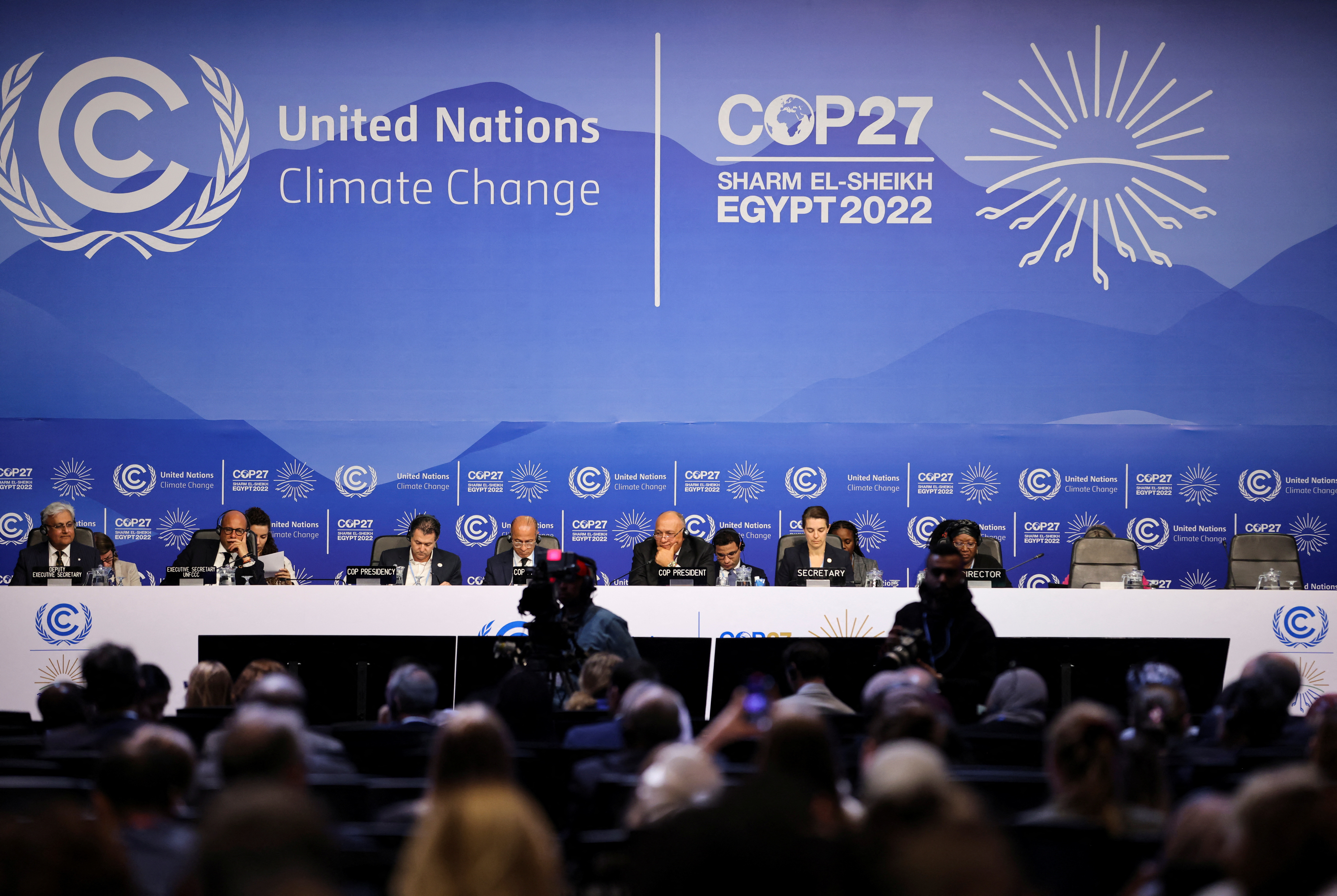
Politics Tuesday, December 23, 2025 00 °c Log In The Past, Present, and Future of COP Politics 0 COP27, the Conference of the Parties to the United Nations Framework Convention on Climate Change, was held in the Egyptian coastal city of Sharm el-Sheikh, from 6th to 18th, November 2022. According to the List of participants. Part one. Parties and observer States. There were 195 total parties and observer States, 1809 total observer organizations, and 948 media who took part in the conference. Based on the diversity of participating members, there have been numerous debates about different climate issues throughout the conference. Before diving into the details of the recent conference, it is crucial to know what the COP is and review past COPs, noting several important decisions made in the past. All nations that are parties to the convention are represented at the COP. The parties review the implementation of the convention and any other legal instruments that the COP adopts, including institutional and administrative arrangements. The major duty of the COP is to review national communications and emission inventories submitted by the parties. By doing so, the COP assesses the effects of the measures taken by the parties and the progress made to achieve the ultimate objective of the Convention. The COP is held every year unless the Parties decide not to do so. The first COP meeting took place in Merlin, Germany in March 1995. After that, the COP conference was hosted in various regions including Africa, Asia, Latin America, the Caribbean, and Europe, just like the way the COP presidency rotates among these five recognized UN regions. Some of the most famous outcomes of past COPs are the adoption of the Kyoto Protocol and the Paris Agreement. The Kyoto Protocol was adopted by COP 3 of UNFCCC on 11th December 1997. The significance of the Kyoto Protocol is that it operationalizes the United Nations Framework Convention on climate change to limit and reduce greenhouse gas (GHG) emissions in accordance with agreed individual targets. Moreover, the protocol is based on the principles and provisions of the convention and follows its annex-based structure. It only binds countries that are already developed, because it recognizes that they are largely responsible for the current high levels of GHG emissions in the atmosphere compared to developing countries. In comparison, the Paris Agreement was adopted at COP 21 in Paris, on 12 December 2015. It is a legally binding international treaty on climate change. Its main target is to limit global warming to well below 2, preferably to 1.5 degrees Celsius, compared to pre-industrial levels. For this goal, countries aim to reach global peaking of greenhouse gas emissions as soon as possible to achieve a climate-neutral world by mid-century. The significance of the Paris Agreement is that it is a landmark in the multilateral climate change process because, for the first time, a binding agreement brings all nations into a common cause to undertake ambitious efforts to combat climate change and adapt to its effects. With such past meetings as precedents, the recent COP 27 made several trends clear. According to the Economist, the following are the five major takeaways of this conference. First, the need for funding for loss and damage was finally acknowledged by richer nations. Having in mind that developed nations have long avoided direct talks on financing loss and damage, COP27 was revolutionary, as the issue was officially admitted to the agenda for the first time. Second, fossil fuel interests are not going down without a fight. For years, several fossil fuel companies and Western governments have been visiting African countries to make them exploit the remaining fossil fuel reserves and export the energy to them, which resulted in some African governments pushing for an agreement that oil and coal will continue to play a crucial role in the continent’s energy mix in the short and medium term. With that in mind, the Sharm El-Sheikh Implementation Plan agreed by countries at the COP reflected the influence of fossil fuel lobbyists. Third, greenwashing will not be tolerated. Fourth, food systems and agriculture have finally come under scrutiny. And finally, the “implementation COP” did not live up to its name but momentum is building elsewhere. There is no doubt that climate change is an international issue that requires multilateral efforts. Therefore, with the accomplishments of COP27, the world must continue fruitful debates for a healthier planet. 2022/11/27 Share Naeyoung Park Works Cited > News Politics Robinson Review Favorites A Review of Alternative Bottleless Water Ooho Dongha Kim Three Reasons Why the U.S. Shot Down the Chinese Spy Balloon Seunghyeon Lee How Truly Significant Is the Collapse of the Silicon Valley Bank on the U.S. Economy? Songi Chai, Yubin Cho, Seohyun Jang.. Joe Biden's Signing of the Respect for Marriage Act Becomes A Turning Point in the Fight for LGBTQ+ Rights As the Birth Rate Issue Emerges in China, CNN’s Recent Report May Shine Light on a New Vision of Politics Seoun Kim The New Fossil Fuel: Lithium Yubin Cho Yubin Cho Trending on Robinson Review As Economic Growth Slows, Retail Sales in March Decreases Joe Biden's Signing of the Respect for Marriage Act Becomes A Turning Point in the Fight for LGBTQ+ Right Vaseline on Your Face? Four Tips That Others Don’t Know The Controversy Behind Netflix “Dahmer–Monster: The Jeffrey Dahmer Story” General About Us Staff Events My account Popular sections Politics Economics Science Arts Other sections Opinion Magazine Games Contact Us Contact Us Social media Advertise With Us COOKIE PREFERENCES PRIVACY POLICY TERMS OF USE Markets data delayed by at least 15 minutes. © Robinson Review 2023. R and ‘Robinson Review’ are trademarks of Robinson Review. Robinson Review and its journalism are subject to a self-regulation regime under the Robinson Editorial Code of Practice.
- Projection and How to Recognize It
Science Tuesday, December 23, 2025 00 °c Log In Projection and How to Recognize It Science 4 Imagine a mother criticizing her son for interrupting her during her talk. The son apologizes to her but remembers that the mother has regularly interrupted his talk. How can we explain the mother’s ironic behavior? A psychological term to explain this phenomenon is projection. Projection is a defense mechanism where one attributes their unacceptable emotions and feelings to others instead of owning them. In other words, it is an act of one applicating their thoughts and feelings to someone else. Projection occurs unconsciously, meaning that humans do not recognize that they are using this mechanism. The projection was first reported by Sigmund Freud, an Austrian neurologist and the founder of psychoanalysis. In his letter written in 1895, he talked about a patient who avoided confronting her feelings of shame by imagining her neighbors gossiping about her. He used projection to explain the woman’s behavior. Humans attribute their unacceptable feelings and discomfort to someone else to avoid confronting it. Projection allows this complex trait without the individual fully recognizing it. Psychologists Carl Jung and Marie-Louise von Franz later added that projection protects oneself from the fear of the unknown. They explain that projection is used to project archetypal ideas to things they don’t know to avoid confusion. However, recent research says humans project to defend their egos and reputation. Connecting this to the previous example, the mother habitually interrupts others’ talk. Instead of her recognizing and accepting that she is interrupting, she casts away to her son. Therefore, the mother criticizes her son for her own habit. This preserves her self-esteem, tolerating her difficult emotions. Attacking another person’s actions is easier than confronting one’s own behavior. Again, this process occurs unconsciously, meaning the mother does not realize she is projecting. Recognizing projecting is extremely difficult. Especially, recognizing one’s own projection is almost impossible. Since projection is not the healthiest method to deal with emotions, it is beneficial to identify projection–several indications of projections are feeling overly defensive and sensitive to what someone has said and quickly blaming it. If these indications occur often, it is essential to answer this question: “In what ways do I act like this person?” Through this process, the use of projection will decrease gradually. Through accepting emotions and thoughts, there is no need to project to others. Arguments and blame will significantly reduce just by embracing your feelings. To conclude, projecting is not an act to be embarrassed or to feel guilty. It exists so one’s body does not have to deal with complex thoughts and feelings. Yet, accepting thoughts might be painful at first glance but it will allow people to become flexible and tolerant. Projecting is never the optimal way to deal with one’s thoughts. 2023/04/23 Share Dohun Kim Works Cited > News Science Robinson Review Favorites A Review of Alternative Bottleless Water Ooho Dongha Kim Three Reasons Why the U.S. Shot Down the Chinese Spy Balloon Seunghyeon Lee How Truly Significant Is the Collapse of the Silicon Valley Bank on the U.S. Economy? Songi Chai, Yubin Cho, Seohyun Jang.. Joe Biden's Signing of the Respect for Marriage Act Becomes A Turning Point in the Fight for LGBTQ+ Rights As the Birth Rate Issue Emerges in China, CNN’s Recent Report May Shine Light on a New Vision of Politics Seoun Kim The New Fossil Fuel: Lithium Yubin Cho Yubin Cho Trending on Robinson Review As Economic Growth Slows, Retail Sales in March Decreases Joe Biden's Signing of the Respect for Marriage Act Becomes A Turning Point in the Fight for LGBTQ+ Right Vaseline on Your Face? Four Tips That Others Don’t Know The Controversy Behind Netflix “Dahmer–Monster: The Jeffrey Dahmer Story” General About Us Staff Events My account Popular sections Politics Economics Science Arts Other sections Opinion Magazine Games Contact Us Contact Us Social media Advertise With Us COOKIE PREFERENCES PRIVACY POLICY TERMS OF USE Markets data delayed by at least 15 minutes. © Robinson Review 2023. R and ‘Robinson Review’ are trademarks of Robinson Review. Robinson Review and its journalism are subject to a self-regulation regime under the Robinson Editorial Code of Practice.
- A Review of Alternative Bottleless Water Ooho
Science Tuesday, December 23, 2025 00 °c Log In A Review of Alternative Bottleless Water Ooho Science Share Dongha Kim 2023/04/23 Works Cited > News 0 2023/04/23 ‘Ooho’ is an edible water bottle that is made with waterproof seaweed film. The Skipping Rock Lab first developed this product and created the original, however, now Notpla (which stands for Not-Plastic) a sustainable packaging company produces the Ooho 'bottle'. The Skipping Rock Lab aims to reduce plastic packaging waste, which inspired Ooho. Ooho is unlike other water bottles since it is edible, not made of plastic, small enough to put into the mouth at once, and has a gelatin-like texture, which can be swallowed easily. With these special characteristics, the aim of this product is to reduce environmental issues caused by non-reusable packaging waste. As Ooho is a biodegradable, sustainable product, it reduces plastic packaging wastes, having a multitude of positive impacts on the environment. Microplastics are harmful toxins to both humans and animals and are often ingested through the use of plastic water bottles. This not only happens directly but also when plastics are broken down in the ocean. Marine life eats these, and then we in turn eat the marine life in a cycle of ingesting microplastics, which has a detrimental effect on our health in the long run. By switching to an Ooho water bottle, we can avoid this issue and decrease the harmful effects on the environment, and our health. Ooho also provides real-life benefits with its small size and lightweight, making it more convenient to carry around than a conventional water bottle. In fact, in the 2019 London Marathon, Ooho water bottles were used by the athletes to reduce the number of plastic bottles thrown away, showing that Ooho is quick, light, and convenient. This product makes it easy for athletes to quench their thirst quickly by putting the whole ‘bottle’ of Ooho into their mouth. The plastic waste created at athletic events is a prime example of how Ooho can reduce the waste created by the use of traditional plastic water bottles. The small size and biodegradable nature of the Ooho material make it useful for other purposes. Besides water, it has the ability to carry other liquids in a small capsule form. We can see this material used in washing detergent pods, and by making this simple change from traditional washing detergent bottles, plastic use is decreased. Ooho might also be used to hold small quantities of milk for daily drinks like tea and coffee -- these drinks are regularly drunk by the public and therefore this would save non-biodegradable plastic from being used. Bottleless water is also a strong alternative to the use of plastic water bottles. However, it may not be practical in our everyday use. Since Ooho is not solid, there is a possibility of bursting, such as if you were to throw it in a bag on the go. The Ooho ‘bottle’ is made from seaweed causing a slimy texture, and this niche product may not appeal to all customers. Also, with its small size, it can only contain a limited amount of water, versus water bottles which usually contain 500 ml to 1 liter. In conclusion, Ooho achieves its main goal of reducing plastic waste by being a biodegradable alternative. Although Ooho may not replace all water bottles, its use in replacing other plastics such as detergent and single-serving milk, is effective in reducing waste. The small changes can add up to reducing plastic waste to help the environment and fight climate change. Ooho inspires others to make small changes for the planet in their everyday lives. These changes will continue to have a positive impact on the environment. Robinson Review Favorites A Review of Alternative Bottleless Water Ooho Dongha Kim Three Reasons Why the U.S. Shot Down the Chinese Spy Balloon Seunghyeon Lee How Truly Significant Is the Collapse of the Silicon Valley Bank on the U.S. Economy? Songi Chai, Yubin Cho, Seohyun Jang.. Joe Biden's Signing of the Respect for Marriage Act Becomes A Turning Point in the Fight for LGBTQ+ Rights As the Birth Rate Issue Emerges in China, CNN’s Recent Report May Shine Light on a New Vision of Politics Seoun Kim The New Fossil Fuel: Lithium Yubin Cho Yubin Cho Science Trending on Robinson Review As Economic Growth Slows, Retail Sales in March Decreases Joe Biden's Signing of the Respect for Marriage Act Becomes A Turning Point in the Fight for LGBTQ+ Right Vaseline on Your Face? Four Tips That Others Don’t Know The Controversy Behind Netflix “Dahmer–Monster: The Jeffrey Dahmer Story” Robinson About Us Staff Events My account Popular sections Politics Economics Science Arts Other sections Opinion Magazine Games Contact Us Contact Us Social media Advertise With Us COOKIE PREFERENCES PRIVACY POLICY TERMS OF USE Markets data delayed by at least 15 minutes. © Robinson Review 2023. R and ‘Robinson Review’ are trademarks of Robinson Review. Robinson Review and its journalism are subject to a self-regulation regime under the Robinson Editorial Code of Practice.
- As the Birth Rate Issue Emerges in China, CNN’s Recent Report May Shine Light on a New Vision of Politics
Politics Tuesday, December 23, 2025 00 °c Log In As the Birth Rate Issue Emerges in China, CNN’s Recent Report May Shine Light on a New Vision of Politics Politics Share Yubin Cho 2023/03/11 Works Cited > News 1 11 March 2023 An article, “China records first population decline in 60 years”, elucidates the declining birth rate issue that had occurred in 2022 in China. Imposed policies such as policy on the number of children per family are also shown. Moreover, decreasing working population and economic consequences are illustrated. The article successfully encourages readers to understand the need for better political solutions for China's demographic crisis, yet can be challenging to people who are not familiar with the issue. Structure The structure of the article consists of three sections: introduction, “Policy solution?”, and “Economic slowdown”. The introduction is effective as a hook, providing the readers with shocking facts about birth rates that are not commonly known. Having an effective and appealing hook makes the readers focused on the topic of the birth rate, empathizing with the author’s concerns on policies. Moreover, the most significant part “Economic slowdown” at the end provokes readers to remember and extend their thoughts about the seriousness afterward. The two main sections have clear subheadings that indicate shifts in the main topic of the writing, too. However, as each section is very independent with clear topics, having brief conclusions or transitions will help the readers to process their thoughts without confusion. For example, if policy problems were discussed shortly again in economic problem parts, it would have been easier for readers to understand naturally that better political solutions are needed, achieving the purpose of the author. Context and language The writing are more effective by consisting of less personal evaluations as readers are able to decide more objectively. For instance, the statistics are presented without any value judgments or personal preferences. This is shown when the author explains the birth rate issue: “The population fell in 2022 to 1.411 billion, down some 850,000 people from the previous year”. It is the reader's choice to decide whether or not the birth rate crisis is severe. On the other hand, the author sometimes uses adjectives to give guidelines on how to decide. For example, the decrease in birth rate is described as a “key” concern of officials. The adjective “key”, a subjective word, hints to the readers that the issue is serious. The article accomplishes the goal of informing the severity of China’s situation to the readers because highlighting opinions for important points while being objective for most of the writing makes the article more persuasive. However, the lack of contextual information can lead to confusion and weaken the point for readers who are not used to the topic of birth rate and policies. Most evidence has no background information and context that helps the readers connect the evidence with the topic. For example, the quote “Many young people are choosing to marry later or deciding not to have children altogether” is given without any explanation of the reasons why. This makes the readers confused because they are unable to know which regulations should be developed to solve this problem, not understanding the need for policy changes. Having contextual information would have made the article successful in the purpose of helping readers empathize with the need for better policies for the birth rate crisis. The article “China records first population decline in 60 years” effectively delivers the severity of the necessity of political improvement for China’s birth rate with clear structure and evidence, but may be too indirect and objective for people who are not familiar with the topic. Robinson Review Favorites A Review of Alternative Bottleless Water Ooho Dongha Kim Three Reasons Why the U.S. Shot Down the Chinese Spy Balloon Seunghyeon Lee How Truly Significant Is the Collapse of the Silicon Valley Bank on the U.S. Economy? Songi Chai, Yubin Cho, Seohyun Jang.. Joe Biden's Signing of the Respect for Marriage Act Becomes A Turning Point in the Fight for LGBTQ+ Rights As the Birth Rate Issue Emerges in China, CNN’s Recent Report May Shine Light on a New Vision of Politics Seoun Kim The New Fossil Fuel: Lithium Yubin Cho Yubin Cho Politics Trending on Robinson Review As Economic Growth Slows, Retail Sales in March Decreases Joe Biden's Signing of the Respect for Marriage Act Becomes A Turning Point in the Fight for LGBTQ+ Right Vaseline on Your Face? Four Tips That Others Don’t Know The Controversy Behind Netflix “Dahmer–Monster: The Jeffrey Dahmer Story” Robinson About Us Staff Events My account Popular sections Politics Economics Science Arts Other sections Opinion Magazine Games Contact Us Contact Us Social media Advertise With Us COOKIE PREFERENCES PRIVACY POLICY TERMS OF USE Markets data delayed by at least 15 minutes. © Robinson Review 2023. R and ‘Robinson Review’ are trademarks of Robinson Review. Robinson Review and its journalism are subject to a self-regulation regime under the Robinson Editorial Code of Practice.
- Luxury Brands and NFT
Arts Tuesday, December 23, 2025 00 °c Log In Luxury Brands and NFT Arts Share Seoa Park 2023/03/11 Works Cited > News 0 March 11, 2023 Luxury brands are increasingly searching for the world of non-fungible tokens (NFTs) to enhance their marketing and engage with customers in more innovative ways. NFTs are digital assets that use blockchain technology to verify ownership and authenticity, making them a natural fit for the luxury industry, where exclusivity and authenticity are highly valued. Luxury brands are exploring the use of NFTs to create limited edition virtual products, such as digital fashion items or artwork, that can only be owned by a select few. This creates a sense of exclusivity and scarcity that resonates with luxury consumers. As metaverse and NFT (Non-Fungible Token) emerged as hot keywords throughout the industry last year, news of luxury brands entering the virtual world is reported almost once a week this year. Amid their attempts to see who carries out the most original project, the German luxury brand "Philip Plain" recently bought a huge virtual real estate worth 1.2 million euros (about 1.62 billion won) on the "Decentraland" metaverse. Gucci, the brand that has been leading the virtual project, also bought the digital space of Hong Kong's video game platform "The Sandbox" under the plan to provide an "immersive experience." These are both metaverse gaming platforms, leading virtual real estate trading platforms that gained huge popularity over the past year by expanding their reach to their own token economy activities. Until now, Louis Vuitton, Balenciaga, and Gucci have continued to invest in the virtual world by planting virtual stores, public relations centers, and digital characters through various video games and platforms. Major luxury Maison is following them and interest in the virtual world is increasing. In February, Prada sportswear line "Linea Rosa" launched a series of Virtual Outfits and Equipments (such as snowmobiles, pet bikes, skiwear) in the extreme video game "Riders Republic," and simultaneously held a "Prada Beyond the Line" multiplayer event. Robinson Review Favorites A Review of Alternative Bottleless Water Ooho Dongha Kim Three Reasons Why the U.S. Shot Down the Chinese Spy Balloon Seunghyeon Lee How Truly Significant Is the Collapse of the Silicon Valley Bank on the U.S. Economy? Songi Chai, Yubin Cho, Seohyun Jang.. Joe Biden's Signing of the Respect for Marriage Act Becomes A Turning Point in the Fight for LGBTQ+ Rights As the Birth Rate Issue Emerges in China, CNN’s Recent Report May Shine Light on a New Vision of Politics Seoun Kim The New Fossil Fuel: Lithium Yubin Cho Yubin Cho Arts Trending on Robinson Review As Economic Growth Slows, Retail Sales in March Decreases Joe Biden's Signing of the Respect for Marriage Act Becomes A Turning Point in the Fight for LGBTQ+ Right Vaseline on Your Face? Four Tips That Others Don’t Know The Controversy Behind Netflix “Dahmer–Monster: The Jeffrey Dahmer Story” Robinson About Us Staff Events My account Popular sections Politics Economics Science Arts Other sections Opinion Magazine Games Contact Us Contact Us Social media Advertise With Us COOKIE PREFERENCES PRIVACY POLICY TERMS OF USE Markets data delayed by at least 15 minutes. © Robinson Review 2023. R and ‘Robinson Review’ are trademarks of Robinson Review. Robinson Review and its journalism are subject to a self-regulation regime under the Robinson Editorial Code of Practice.
- There’s Not Going to Be World War III, But It’s Still Going to Be Bad
Magazine Tuesday, December 23, 2025 00 °c Log In There’s Not Going to Be World War III, But It’s Still Going to Be Bad Magazine 0 “Our plans do not include the occupation of Ukrainian territories. We are not going to impose anything on anyone by force,” an excerpt from Vladimir Putin’s speech on the 24th of February, declaring war on Ukraine. Ukraine’s temptation to join NATO, an organization focused on resisting the expansion of the Soviet Union in the post-World War era, has ultimately initiated the crisis. While Russia was informed of the termination of the expansion of NATO towards the east in 1991, the collapse of the Soviet Union, more nations would join the organization. As Ukraine, a country directly sharing borders with Russia, is determined to join an anti-Russo organization, Russia struck a global crisis–the war. Regardless of the intentions that sparked the initial trigger of the rifle, destructive damages were made in sectors such as energy, transportation, industrials, and materials. Chiefly in the oil industry, additional layers of impact were added to the current struggles to maintain stable oil prices. In the status quo, when oil prices were inflated in the aftermath of the global pandemic, Russia–a nation responsible for approximately 10% of the global petroleum production–entering the war created another increase in oil prices and a substantial decrease in oil-related enterprises’ stock. An extreme instance is Lukoil, a Russian company primarily devoted to exporting gas from non-Russian refineries, which exerts its status in the sector by being the 99th largest public company in the world and the second largest in Russia. Despite its recent trend in the pre-war era, the corporation’s stock price failed to resist the influence of the political crisis. Due to the elasticity of the energy sector, the stock price declined dramatically from $92 to $7 in less than a month. Moreover, Lukoil experienced a decline in revenue since the outbreak of the pandemic: a 3.8% decline in 2020, followed by a drastic 37.3% drop in 2021, according to Fortune. Additionally, OPEC, an intergovernmental organization of petroleum exporting countries, announced their plans to cut oil production by two million barrels–circa the total amount of oil consumed daily in South Korea–per day. This recent move makes a critical impact on oil businesses and is thus expected to assist in the further elevation of gas prices. Pandemics and political conflicts are inevitable patterns in society, as reflected in our world history. People had their prolonged desire since their existence to capture greater areas of land, maximize profit, and quarrel for various reasons. Wars happened more often in the past compared to the present, though they still remain a continuity and will shape human history in a similar manner in the future. In essence, the prolongment of the Russo-Ukrainian war has left us detrimental damage not only in enterprises based in Russia and Ukraine but at a global scale and in every sector more or less notably. It has been 241 days since Russia invaded Ukraine, prolonging from 24 February 2022. No one knows when the war will end or when the pain will stop. It was 24 February 2022 when Russia first invaded Ukraine. President Vladimir V. Putin presented his objective of the invasion to be the “demilitarization and denazification" of Ukraine, preventing Ukraine from joining NATO (North Atlantic Treaty Organization). International organizations such as the United Nations have openly denounced Russia for war crimes, and western nations supported Ukraine by imposing sanctions on Russia and providing weaponry. Along with the partial mobilization of Russia on 21 September 2022, the war will only result in more suffering and costs to humanity. The prolongation of the Ukraine-Russia war had a detrimental effect on the global economy and market of energy due to the large contributions of Russian imports. In 2021, 60% of Russia’s revenue was from energy exports of oil and refined products; according to IEA (International Energy Agency), Russia accounted for 14% of the world’s total supply by exporting 4.7 million BPD of crude throughout the world. Consequently, as Russia invaded Ukraine, oil prices sorted and global gasoline prices increased with the continuation of the war. Heavily importing fuel from Russia, the E.U. is particularly suffering from the rising prices of gas on the global market after the sanctions and an embargo on Russian oil imports. As the Russian-Ukraine war extends, the energy crisis for the world will continue especially in the winter. Experts suggest “the EU imports from alternative suppliers would have to rise by 70%” in the short term. To reduce the reliance on Russian imports and withstand the energy crisis, it will be essential for the E.U. to reduce demands on Russian imports and establish alternative sources of energy to substitute Russian oil imports. Recently, Germany extended the operations of three nuclear power stations that were planned to close by the end of 2022 until mid-April; with extreme reliance on gas from Russia and limited imports after the invasion of Russia, Germany overruled their nuclear decommissioning plan. The nations under the E.U. such as France and Germany are attempting to diversify their energy imports and attain autonomy from Russian imports. It has long been acknowledged how mobilized warfare's consequences can be detrimental to humanity. From an economic perspective, with the world intertwined through intricate and broad connections, the aftermath of the war affects not only the local states but also the global network; the limited imports of gas from Russia caused fluctuations of gas in the global market. With society and the world becoming more interconnected through the progressive development of technologies and research, the choices and conflicts between nations will have consequential effects on the whole world market. Before the tragedy of the Ukraine war erupted, NATO sought an alliance with Russia and worked for neutrality. However, as the war began, NATO held a defensive position from Russia because of the threat to Euro-Atlantic Security. NATO allies asked Putin to cease the violence. Russia continued to threaten Ukraine and Euro-Atlantic Security, however. Russia’s stubborn violence worsened Russia and NATO’s relationship, creating hostility. Consequently, NATO placed unprecedented restrictive measures on Russia, including economic sanctions. Russia’s war against Ukraine created antagonism between Russia and NATO. Currently, the war has entered a protracted state of conflict, becoming a war of attrition. Amidst this, Russia faces severe morale problems. The U.K.’s Ministry of Defense stated that “Cases of whole Russian units refusing orders and armed standoffs between officers and their troops continue to occur''. On the other side, Ukraine’s calls for greater military aid are not met. Ukrainian advisers requested “60 or even 300” rocket artillery systems, to which the U.S., U.K., and Germany have only promised 10. Oleksandr Starukh, a Ukrainian governor, stated that “[they] need these weapons” as economic damage will increase if the war continues. These factors make it unlikely for any side to make headway in the foreseeable future. In regard to Russia’s political situation, “We will … use all the means at our disposal to protect Russia … this is not a bluff,” said Vladimir Putin during his speech in 2022. Sept. 21, regarding the usage of nuclear weapons. With Russia’s constant threats to use nuclear weapons, the world has expressed worries about the beginning of Armageddon–a catastrophic war that would endanger humanity. Those opposing the Russian threat: EU and NATO have responded to Vladimir Putin’s threats, matching the aggressiveness that Putin has shown, as the EU’s foreign policy chief, Josep Borrell, declared, “[If Putin utilizes nuclear weapons] the Russian army will be annihilated.” Meanwhile, the majority of people tend to support the actions of the Russian Armed Forces in Ukraine according to public polls by Levada Center. 47% of the respondents said they “definitely support” the war, and were revealed to make false justifications from blind veneration for Putin. 28% of the respondents said they “mostly support” the war, due to fear of adverse consequences for themselves. Furthermore, it is revealed that the Russians, who don’t know the plight thoroughly, merely join the mainstream perspective based on the belief that the government knows best. 2023/10/23 Share Seongmin Choi, Hyundo Jung, Jaeheon Jung, Yeongho Jeong, Gyumin Kim, Hyunseo Kim, Seun Kim, Yechan Kim, Jeongwoo Lee, Yoonseo Lim, Seoa Park Works Cited > News Magazine Robinson Review Favorites A Review of Alternative Bottleless Water Ooho Dongha Kim Three Reasons Why the U.S. Shot Down the Chinese Spy Balloon Seunghyeon Lee How Truly Significant Is the Collapse of the Silicon Valley Bank on the U.S. Economy? Songi Chai, Yubin Cho, Seohyun Jang.. Joe Biden's Signing of the Respect for Marriage Act Becomes A Turning Point in the Fight for LGBTQ+ Rights As the Birth Rate Issue Emerges in China, CNN’s Recent Report May Shine Light on a New Vision of Politics Seoun Kim The New Fossil Fuel: Lithium Yubin Cho Yubin Cho Trending on Robinson Review As Economic Growth Slows, Retail Sales in March Decreases Joe Biden's Signing of the Respect for Marriage Act Becomes A Turning Point in the Fight for LGBTQ+ Right Vaseline on Your Face? Four Tips That Others Don’t Know The Controversy Behind Netflix “Dahmer–Monster: The Jeffrey Dahmer Story” General About Us Staff Events My account Popular sections Politics Economics Science Arts Other sections Opinion Magazine Games Contact Us Contact Us Social media Advertise With Us COOKIE PREFERENCES PRIVACY POLICY TERMS OF USE Markets data delayed by at least 15 minutes. © Robinson Review 2023. R and ‘Robinson Review’ are trademarks of Robinson Review. Robinson Review and its journalism are subject to a self-regulation regime under the Robinson Editorial Code of Practice.
- Youth Activism and Climate Change Policy: Are Young Leaders Reshaping the Political Landscape?
Tuesday, December 23, 2025 00 °c Log In Works Cited > News Share JiAn Lee 11/01/2024 0 In the status quo, global young leaders are gearing up to tackle climate change — one of the most pressing issues of our time. Manifestations of extreme weather, rising sea levels, and unprecedented loss of biodiversity indicate this existential threat, which urgently calls for global climate change. The majority of conventional climate policies, which involve gradual adjustments and bureaucratic delays, are inadequate in managing the crisis. A sense of urgency and determination has been ignited within youth activists, turning a long-standing problem into ‘emergency needs that require immediate attention’. Young environmentalists are not only taking action through grassroots movements such as Fridays for Future, which were led by Greta Thunberg and other influential figures, but they are also changing the discourse on climate policy. Climate activism among young people that transcends generational boundaries can serve as a global movement committed to environmental justice and sustainability. It is an unparalleled phenomenon since youth are coming out in droves, with movements including the Sunrise Movement and Extinction Rebellion taking center stage. They are extremely urging governments to engage in more than just change discussions, taking meaningful and systemic steps into account. In the European Union, ambitious commitments to reduce greenhouse gas emissions were made due to mounting pressure from young activists, which has already produced results. The U.S.’s 2022 timeline is in progress. Unprecedented funding for green initiatives was granted under the Inflation Reduction Act, indicating the involvement of young people in shaping environmental policies. Political participation has been redefined by this new activism movement. Activists are using social media to call for action; and hold politicians accountable in real time, which is the cause of their growing movement. Political campaigns are being developed by them, as seen in the 2020 campaign. Climate action demands from the youth influenced the candidates’ platforms in the U.S. election. Furthermore, their policy commitments to acknowledge climate change as a crisis create enabling conditions for long-term thinking, environmental justice; and intergenerational cooperation. This further outlines that climate policy is the primary concern and one that will have enduring consequences for young people. Yet, the path is not effortless. Youth activists frequently encounter significant opposition, particularly from fossil fuel industry sectors as well as leaders who are unwilling to challenge the current status. Despite this, they remain resilient. Numerous young politicians are running for office, seeking to introduce new ideas to political institutions that have been dominated by older generations. Why is this happening? Not only are they pushing for new policies, but they are seeking a political culture that truly values sustainability and environmental responsibility. Essentially, the youth have breathed new life into the global conversation about climate change. Those who are persistent, innovative, and committed to social justice have made climate action an unstoppable cause. Despite the mounting climate challenges, young leaders are making strides toward a more sustainable future by emphasizing the importance of their voices and vision in shaping the world they inherit. Trending on Robinson Review As Economic Growth Slows, Retail Sales in March Decreases Joe Biden's Signing of the Respect for Marriage Act Becomes A Turning Point in the Fight for LGBTQ+ Right Vaseline on Your Face? Four Tips That Others Don’t Know The Controversy Behind Netflix “Dahmer–Monster: The Jeffrey Dahmer Story” General About Us Staff Events My account Popular sections Politics Economics Science Arts Other sections Opinion Magazine Games Contact Us Contact Us Social media Advertise With Us COOKIE PREFERENCES PRIVACY POLICY TERMS OF USE Markets data delayed by at least 15 minutes. © Robinson Review 2023. R and ‘Robinson Review’ are trademarks of Robinson Review. Robinson Review and its journalism are subject to a self-regulation regime under the Robinson Editorial Code of Practice. Robinson Review Favorites A Review of Alternative Bottleless Water Ooho Dongha Kim Three Reasons Why the U.S. Shot Down the Chinese Spy Balloon Seunghyeon Lee How Truly Significant Is the Collapse of the Silicon Valley Bank on the U.S. Economy? Songi Chai, Yubin Cho, Seohyun Jang.. Joe Biden's Signing of the Respect for Marriage Act Becomes A Turning Point in the Fight for LGBTQ+ Rights As the Birth Rate Issue Emerges in China, CNN’s Recent Report May Shine Light on a New Vision of Politics Seoun Kim The New Fossil Fuel: Lithium Yubin Cho Yubin Cho Youth activists demand urgent climate action, reshaping global conversations on environmental policy. As young activists take to the streets for climate action, can their efforts truly reshape the political landscape and drive meaningful policy change? JiAn Lee Youth Activism and Climate Change Policy: Are Young Leaders Reshaping the Political Landscape?
- Two Major Elections Bring Chaos to the World: Italy’s Giorgia Meloni and China’s Xi Jinping
Politics Tuesday, December 23, 2025 00 °c Log In Two Major Elections Bring Chaos to the World: Italy’s Giorgia Meloni and China’s Xi Jinping Politics Share Jiwon Moon 2023/11/27 Works Cited > News 0 11/27 The First Female Right-wing Prime Minister of Italy On October 22, 2022, Giorgia Meloni won the election and became Italy's first female prime minister. Meloni’s delegation ceremony at the Quirinale Palace in Rome was executed by Italian President Sergio Mattarella. Meloni, chief of an alliance of far-right and center-right parties, is set to form the most right-winged government in Italy with 24 ministers. The new government is organized by two other right-wing leaders: Matteo Salvini and Silvio Berlusconi. Both leaders are extreme nationalists who publicly expressed admiration for Russian President Vladimir Putin in the past. About Giorgia Meloni Giorgia Meloni grew up in the neighborhood of Garbatella built during Benito Mussolini's fascist dictatorship. She started her political movement by joining an organization with fascist roots called Youth Front. Later, Meloni created her political party, Brothers of Italy, in 2012 and increased its approval rating from 4% to 26% within four years. She also has a partnership with Berlusconi's Forza Italia and Salvini's League, two major parties that helped her to possess enough seats in parliament to win the election. Reasons of Italy’s Support Towards Meloni Italy faced various problems in different sectors. In particular, the escalating energy cost and the shortage of the agricultural sector produced high risks for Italian businesses and households. According to a recent report by an Italian agriculture company, rising production costs have forced many small agricultural businesses to shut down due to their inability to cope. As the harsh situation continues in Italy, many firms and citizens hope to fix the present issues through strong political leadership. Thus, Meloni, strongly influenced by Mussolini, participated in the election and immediately gained people's attention and support. Beyond the Election Meloni won the parliamentary elections on a campaign built around a promise to block migrant ships and support for traditional "family values" and anti-LGBTQ themes. It suggests that the shadow of nationalism in Italy has not been removed yet. Thus, the right-wing government centered on Meloni has several factors of instability. As two new leaders have already shown admiration toward Russian President Putin, it is unclear whether Italy will stand by Europe or Russia. In addition, the world is worried about the advent of another dictator and the path Meloni will walk through would be the same as the path of Mussolini. Xi Jinping's Third Consecutive Term in China China's top leader XI Jinping is ready to begin his third term with a greater concentration of power. The week-long Communist Party Congress (CCP) ended on Saturday. The public venue will now be replaced by a new Central Committee, a group consisting of the party's top leadership members. The Start of the Purge Through the Communist Party Congress, Xi showed his ambition to consolidate his power by forcing key party leaders to retire from the top positions and appointing his allies. Premier Li Keqiang and Wang Yang are excluded from the new Central Committee. The action of exclusion indirectly suggests Kequiang and Yang have left China's main body, making a transition to full retirement. In addition to the departure of two former members,two other members past the retirement age of 68 will be withdrawn which will ultimately enable four seats on the Standing Committee available. Hu Jintao’s Disappearance In the past, the party's five-year national congress was held at the political theater, showcasing the unity and legitimacy of the party. However, during the ceremony in the Great Hall of the People, former top leader Hu Jintao was led out of the event. The departure of Jintao appeared as unexpected to the guests as he was reluctant to leave. The Chinese media did not report the sudden incident, rather blocking the discussion as a whole. 105 minutes Speech After sealing his third term, Xi delivered a 105-minute speech in front of the new Central Committee. Xi highlighted his reluctance to give up on the dream of uniting Taiwan with mainland China during his speech.e Xi articulated his last warning to the United States and Taiwan governments. "We will continue to strive for peaceful reunification with great sincerity and the utmost effort, but we will never promise to renounce the use of force." In addition, Xi explained other goals China will achieve over the next five years. The goals include solving the gap between the rich and the poor and reunifying different tribes. Italian and Chinese leaders are likely to threaten the world's economy and security in the future. Robinson Review Favorites A Review of Alternative Bottleless Water Ooho Dongha Kim Three Reasons Why the U.S. Shot Down the Chinese Spy Balloon Seunghyeon Lee How Truly Significant Is the Collapse of the Silicon Valley Bank on the U.S. Economy? Songi Chai, Yubin Cho, Seohyun Jang.. Joe Biden's Signing of the Respect for Marriage Act Becomes A Turning Point in the Fight for LGBTQ+ Rights As the Birth Rate Issue Emerges in China, CNN’s Recent Report May Shine Light on a New Vision of Politics Seoun Kim The New Fossil Fuel: Lithium Yubin Cho Yubin Cho Politics Trending on Robinson Review As Economic Growth Slows, Retail Sales in March Decreases Joe Biden's Signing of the Respect for Marriage Act Becomes A Turning Point in the Fight for LGBTQ+ Right Vaseline on Your Face? Four Tips That Others Don’t Know The Controversy Behind Netflix “Dahmer–Monster: The Jeffrey Dahmer Story” Robinson About Us Staff Events My account Popular sections Politics Economics Science Arts Other sections Opinion Magazine Games Contact Us Contact Us Social media Advertise With Us COOKIE PREFERENCES PRIVACY POLICY TERMS OF USE Markets data delayed by at least 15 minutes. © Robinson Review 2023. R and ‘Robinson Review’ are trademarks of Robinson Review. Robinson Review and its journalism are subject to a self-regulation regime under the Robinson Editorial Code of Practice.
- Recording Haenyeo - Part 1
Opinion Tuesday, December 23, 2025 00 °c Log In Opinion Recording Haenyeo - Part 1 Opinion 01/23/2024 Share Chaeri (Iris) Kang “Hui~ Hui~” I’m trying to find a word that best describes Haenyeos’ sumbisori, but I can’t. Not like other sounds, their whistling sounds when they come up to the surface are majestic yet life-defining. While some Haenyeos may consider the sea as their home, some may give a deep sigh. But it is static that they are an invaluable part of the Haenyeo community where every Haenyeo, regardless of their age or experience, is treated equally and with respect. Haenyeos are sea women divers who dive into water 3 ~ 20 meters deep to catch fresh seafood such as abalone, seaweed, and octopus. They rely solely on their breath without the aid of oxygen tanks or snorkeling equipment. In the Haenyeo community, there is a strict hierarchy depending on the amount of experience and the skills one possesses. Haenyeos who can work over 15 meters of depth are considered Sang-gun, those who can work under 8~10 meters of depth are considered Joong-gun, and those who can work under 5~7 meters of depth are considered Ha-gun. This teaching has been passed down for generations: ‘Don’t be greedy.’ As Haenyeos often forget their remaining breath as they are too focused on extracting seafood, seniors Haenyeos tell the younger ones to “Do as much as you can.” In the Haenyeo community, the younger generations feel grateful since they are treated the same and earn money equally even though they might not be as experienced as the senior Haenyeos. The old and experienced Haenyeos also feel grateful that young Haenyeos participate and continue their legacy of the Haenyeo culture. According to Kwon Young-hee, who is the oldest Haenyeo in Jongdal-ri, younger Haenyeos taught her and other older Haenyeos such a good thing. She said that the younger Haenyeos would put their camera underwater and say, “Samchun, look at this. It’s so beautiful.” Since many older Haenyeos started the job for their living during difficult economic situations, they would not have noticed the beauty of the seafood. Thus, older Haenyeos not only teach the younger generations how to work, but younger divers teach experienced divers such things. “So obviously this culture of Jeju Haenyeo should become a tradition. It should be carried on. It should never go away. It should be transmitted.” Kwon’s resolute voice lingers. Works Cited > News News Robinson Review Favorites A Review of Alternative Bottleless Water Ooho Dongha Kim Three Reasons Why the U.S. Shot Down the Chinese Spy Balloon Seunghyeon Lee How Truly Significant Is the Collapse of the Silicon Valley Bank on the U.S. Economy? Songi Chai, Yubin Cho, Seohyun Jang.. Joe Biden's Signing of the Respect for Marriage Act Becomes A Turning Point in the Fight for LGBTQ+ Rights As the Birth Rate Issue Emerges in China, CNN’s Recent Report May Shine Light on a New Vision of Politics Seoun Kim The New Fossil Fuel: Lithium Yubin Cho Yubin Cho Trending on Robinson Review As Economic Growth Slows, Retail Sales in March Decreases Joe Biden's Signing of the Respect for Marriage Act Becomes A Turning Point in the Fight for LGBTQ+ Right Vaseline on Your Face? Four Tips That Others Don’t Know The Controversy Behind Netflix “Dahmer–Monster: The Jeffrey Dahmer Story” General About Us Staff Events My account Popular sections Politics Economics Science Arts Other sections Opinion Magazine Games Contact Us Contact Us Social media Advertise With Us COOKIE PREFERENCES PRIVACY POLICY TERMS OF USE Markets data delayed by at least 15 minutes. © Robinson Review 2023. R and ‘Robinson Review’ are trademarks of Robinson Review. Robinson Review and its journalism are subject to a self-regulation regime under the Robinson Editorial Code of Practice.
- Why Do Fast Fashion Industries Use Child Labor?
Politics Tuesday, December 23, 2025 00 °c Log In Politics Why Do Fast Fashion Industries Use Child Labor? Politics 12/11/2023 Share Minji Kim The International Labor Organisation estimates that 260 million adolescents labor worldwide. The UN defines child labor as “work for which the child is either too young – work done below the required minimum age – or work which, because of its detrimental nature or conditions, is altogether considered unacceptable for children and is prohibited." the ILO estimates that 170 million of them are involved in child labor. Despite being illegal in the vast majority of nations, child labor continues to be prevalent in a number of the world's poorest regions. According to the International Labor Organization, approximately 170 million children are employed, many of them manufacturing textiles and clothing to fulfill the demand for consumers in the US, Europe, as well as other countries. Conditions are gradually getting more capable. The ILO estimates, child labor decreased by 30% between 2000 and 2012, however, 11% of children internationally endure in circumstances that deny them the freedom to attend school without interruption from the workplace. A race to the bottom has been triggered by fast fashion, forcing businesses to initiate searches for ever-cheaper labor resources. "There are many girls in countries like India and Bangladesh who are willing to work for very low prices and are easily brought into these industries under false promises of earning decent wages," explains Sofie Ovaa, global campaign coordinator of Stop Child Labour." According to a recent report by the India Committee of the Netherlands (ICN) and the Centre for Research on Multinational Corporations (SOMO), employers in southern India convince parents of girls in underprivileged rural areas to provide them to spinning mills with the guarantee of a lucrative profession, decent housing, three wholesome meals a day, and chances for higher education and training in along with a one-time payment. Considering a significant amount of the supply chain for clothing involves low-skilled labor and some professions are even more suitable for children than mature individuals, child labor is a particular issue. Children are more straightforward to deal with since they are perceived as dutiful laborers who remain undetected. They frequently receive less than the minimum wage, undergo extensive labor hours, and are exposed to pesticides. The International Labor Organization estimates that 170 million children, or 11% of all children around the world, are working as children. Child labor is widespread in the yarn and spinning factories, which constitutes the next step in the supply chain. Children also participate in the "cut-make-trim" phase, which particularly involves assembling garments. Childrens are exposed to vulnerable conditions; nations should keep their eye on the companies which uses child labor and try to eliminate child labor in the near future. Works Cited > News Robinson Review Favorites A Review of Alternative Bottleless Water Ooho Dongha Kim Three Reasons Why the U.S. Shot Down the Chinese Spy Balloon Seunghyeon Lee How Truly Significant Is the Collapse of the Silicon Valley Bank on the U.S. Economy? Songi Chai, Yubin Cho, Seohyun Jang.. Joe Biden's Signing of the Respect for Marriage Act Becomes A Turning Point in the Fight for LGBTQ+ Rights As the Birth Rate Issue Emerges in China, CNN’s Recent Report May Shine Light on a New Vision of Politics Seoun Kim The New Fossil Fuel: Lithium Yubin Cho Yubin Cho Trending on Robinson Review As Economic Growth Slows, Retail Sales in March Decreases Joe Biden's Signing of the Respect for Marriage Act Becomes A Turning Point in the Fight for LGBTQ+ Right Vaseline on Your Face? Four Tips That Others Don’t Know The Controversy Behind Netflix “Dahmer–Monster: The Jeffrey Dahmer Story” General About Us Staff Events My account Popular sections Politics Economics Science Arts Other sections Opinion Magazine Games Contact Us Contact Us Social media Advertise With Us COOKIE PREFERENCES PRIVACY POLICY TERMS OF USE Markets data delayed by at least 15 minutes. © Robinson Review 2023. R and ‘Robinson Review’ are trademarks of Robinson Review. Robinson Review and its journalism are subject to a self-regulation regime under the Robinson Editorial Code of Practice.



Trending on Robinson Review
Contact Us
COOKIE PREFERENCES
PRIVACY POLICY
TERMS OF USE
Markets data delayed by at least 15 minutes. © Robinson Review 2023. R and ‘Robinson Review’ are trademarks of Robinson Review.
Robinson Review and its journalism are subject to a self-regulation regime under the Robinson Editorial Code of Practice.