

295 results found with an empty search
- Aftermath of banning dog meat in Korea
Business Tuesday, December 23, 2025 00 °c Log In Business Aftermath of banning dog meat in Korea Business 01/24/2024 Share Jayden Choi The culture of eating dog meat has been present throughout numerous parts of South Korea for decades. This uncommon culture brings controversial opinions from South Korean citizens and internationally. While some may support the consumption of dog meat, many others have not even tried consuming a single bit. Indeed, in Korea, about 93 percent of citizens surveyed show that they have no intention of eating dog meat in the future, and 83 percent support the total ban on selling dog meat. In fact, the government of Korea recently passed a law that banned all selling dog meat: starting from 2027, when one is caught selling dog meat, they will be sentenced to a maximum of 3 years in prison. This significant change in the nation has undoubtedly affected the overall industry and business. As of 2024, there are about 1600 shops that sell dog meat and around 1150 farms provide these dogs for sale. Because they are now legally not allowed to continue in this particular industry, many restaurant owners and farm owners started making changes; some are switching to other types of meat, and farm owners are doing likewise. Nevertheless, the Korea Dog Breeding Farming Cooperation demands about $1500 for each dog by government-provided support to change their industry, which would accumulate to approximately $1 billion. This not only impacts the dog meat business for local restaurants but influences Korea's global trade with other nations. For example, according to KATI, imports of dog meat from countries like China and Thailand will be banned with the new law from now on. The culture of eating dogs is being considered as very controversial due to ethical reasons in killing an animal that is understood as one of the most fed pets. With the new law that has been implemented to annihilate dog meat consumption, businesses such as the farm industry and local restaurants have been critically impacted. The banning of selling dog meat may seem just for animal rights reasons, but the economical impact should also be considered. Works Cited > News News Robinson Review Favorites A Review of Alternative Bottleless Water Ooho Dongha Kim Three Reasons Why the U.S. Shot Down the Chinese Spy Balloon Seunghyeon Lee How Truly Significant Is the Collapse of the Silicon Valley Bank on the U.S. Economy? Songi Chai, Yubin Cho, Seohyun Jang.. Joe Biden's Signing of the Respect for Marriage Act Becomes A Turning Point in the Fight for LGBTQ+ Rights As the Birth Rate Issue Emerges in China, CNN’s Recent Report May Shine Light on a New Vision of Politics Seoun Kim The New Fossil Fuel: Lithium Yubin Cho Yubin Cho Trending on Robinson Review As Economic Growth Slows, Retail Sales in March Decreases Joe Biden's Signing of the Respect for Marriage Act Becomes A Turning Point in the Fight for LGBTQ+ Right Vaseline on Your Face? Four Tips That Others Don’t Know The Controversy Behind Netflix “Dahmer–Monster: The Jeffrey Dahmer Story” General About Us Staff Events My account Popular sections Politics Economics Science Arts Other sections Opinion Magazine Games Contact Us Contact Us Social media Advertise With Us COOKIE PREFERENCES PRIVACY POLICY TERMS OF USE Markets data delayed by at least 15 minutes. © Robinson Review 2023. R and ‘Robinson Review’ are trademarks of Robinson Review. Robinson Review and its journalism are subject to a self-regulation regime under the Robinson Editorial Code of Practice.
- The Resurgence of the Far Right
Politics Tuesday, December 23, 2025 00 °c Log In Works Cited > News Share Hyunbin Jo 2023/02/05 0 The rise of the far-right parties, and their politics around the world in recent times have raised a growing concern about how influential they have become in world politics.From the German Alternative for Germany to the French National Rally as some prominent examples of such influential parties, it seem clear, that the far-right are making a comeback to the world stage. The resurgence of far-right politics around the world reminds us of the interbellum years between the two world wars, when facism rose in prominence as a political ideology. Now, just like the interbellum years, far-right politics are rising all over the world. In Italy, a far-right coalition government has taken power, headed by Giorgia Meloni`s Brothers of Italy. In France, Marine Le Pen`s National Rally has risen to prominence challenging Macron`s presidency in two presidential elections. In Germany, the Alternative for Germany has gained 81 seats in the German Bundestag. While the Hungarian Fidesz Party, and its prime minister, Viktor Orban, is shifting to a far-right agenda even though at its foundation, Fidesz started out as a center-left, liberal political party. The Freedom Caucus faction,a notable right-to far right faction in the Republican party has grown in strength, and many of its ultra-conservative members have actively blocked Representative McCarthy`s many bids to become the house speaker until concessions were made. Consequently, these, far-right politics are back, and they have gained even more influence than before. But a question arises, why? Why is this resurgence happening? Did they not learn the lesson some seventy-eight years ago? The reason is simple…in a way. These movements are becoming popular again thanks to the people's desire for strong, reactionary changes. The people's wishes to return to past “glory days'', often highly dramatized, fueling their popularity. This belief, coupled with people who feel alienated from the current political discourse, and wish for their golden age to come back, is the main source of support for far-right politics. Of course, there are other lesser reasons as well, such as growing nationalism, economic and security problems, and growing xenophobia, but at its core, far-right politics now are fueled by a strong want of reactionary policies against an ever changing world. To put it simply, it is resentment against change. For example, The National Rally of France is fueled by strong French nationalism, anti-immigration, and strong Euroskeptiscm views. Supported by anti-immigration views, and strong dissident for international forces, primarily the EU,that drive change in Europe, and calling for an “independent” France.The National Rally is the textbook example of a far-right political party. Another example is the Hungarian Fidesz Party, championing strong Hungarian nationalism and anti-immigrant illiberalism. Just like these prominent examples, the future of the resurgent far-right seems bright, or does it? The far-right politics have indeed chosen a good time to come back. However, the question is, will it prevail, or will it fall just like the last time it rose to prominence during the roaring twenties. Although the growing skepticism to globalization, and the surge of xenophobia due to the migrant crisis that struck Europe, and finally the different economic and security problems and threats, like the Russo-Ukrainian War, and its effects do fuel those parties, it doesn't mean guaranteed success for these parties. Strong political opposition from existing parties, as well as the radical aggression the far-right tend to show are barriers that it must overcome, if it indeed wishes to take complete control of a nation's politics. Until now, the far-right seems to be successful, but only time will tell, if their success will continue. Politics Trending on Robinson Review As Economic Growth Slows, Retail Sales in March Decreases Joe Biden's Signing of the Respect for Marriage Act Becomes A Turning Point in the Fight for LGBTQ+ Right Vaseline on Your Face? Four Tips That Others Don’t Know The Controversy Behind Netflix “Dahmer–Monster: The Jeffrey Dahmer Story” General About Us Staff Events My account Popular sections Politics Economics Science Arts Other sections Opinion Magazine Games Contact Us Contact Us Social media Advertise With Us COOKIE PREFERENCES PRIVACY POLICY TERMS OF USE Markets data delayed by at least 15 minutes. © Robinson Review 2023. R and ‘Robinson Review’ are trademarks of Robinson Review. Robinson Review and its journalism are subject to a self-regulation regime under the Robinson Editorial Code of Practice. Robinson Review Favorites A Review of Alternative Bottleless Water Ooho Dongha Kim Three Reasons Why the U.S. Shot Down the Chinese Spy Balloon Seunghyeon Lee How Truly Significant Is the Collapse of the Silicon Valley Bank on the U.S. Economy? Songi Chai, Yubin Cho, Seohyun Jang.. Joe Biden's Signing of the Respect for Marriage Act Becomes A Turning Point in the Fight for LGBTQ+ Rights As the Birth Rate Issue Emerges in China, CNN’s Recent Report May Shine Light on a New Vision of Politics Seoun Kim The New Fossil Fuel: Lithium Yubin Cho Yubin Cho Politics Hyunbin Jo The Resurgence of the Far Right
- No Red Wave: Biden May Have Saved His Legacy and the Democratic Party
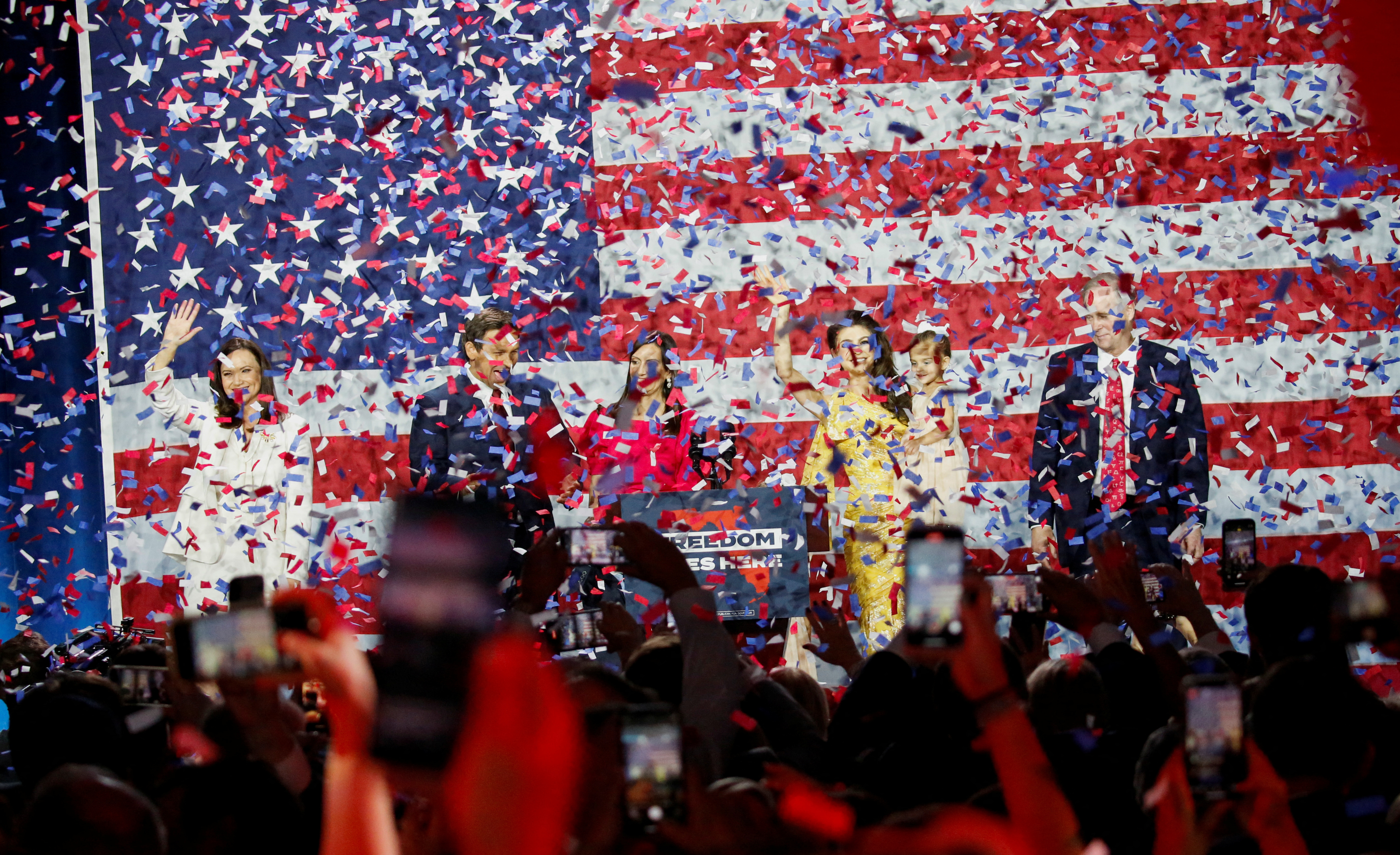
Magazine Tuesday, December 23, 2025 00 °c Log In No Red Wave: Biden May Have Saved His Legacy and the Democratic Party Magazine 0 Midterm elections refer to a ballot held during the midpoint of a President’s four-year term in office. All 435 seats in the United States House of Representatives and 33 or 34 of the 100 seats in the United States Senate go up for election. What Is It, and What Happened? The midterm elections are for a two-part parliament, the House of Representatives and the Senate. These votes are held every two years and are called midterm elections during the middle of the president’s four-year term. Midterm elections often serve as a verdict on the president's course, and the party that controls the White House tends to lose seats. It is a concern of President Biden, whose voter approval rating has been running below 50% since August of last year. Prior to the election, Biden admitted at a press conference that his party would not hold on to the House, mentioning that the toss-up races were leaned towards the Republican Party. However, the results of it were unexpected, one that perhaps only the most optimistic Democrat could have imagined. In sum, the battle between the democrats and republicans came far closer than many analysts have previously predicted. For Congress–which includes the House of Representatives and the Senate, Democrats saw a victory with 50 seats won over 49 in the Senate, while the Republicans are poised to win the House with 220 seats over 213. The Republicans’ success in gaining control of the House of Representatives is a first, at least since 2018, under Donald Trump’s presidency. Impacts & Responses President Biden, however, was in fact expecting the Republicans to appear likely to control the House of Representatives following the election and hence, claimed that he is “prepared to work with [his] Republican colleagues,” the day after the election. Biden even announced his plans to discuss how leaders from both parties would work together and yet, it still remains unclear which areas of policies he is open to compromise with. However, what Biden did make clear is the areas that he will not. He strongly emphasized that he will veto any creation of a federal abortion ban and the repeal of the Inflation Reduction Act. Moreover, he made it clear that he won’t pass any significant cuts to Social Security or Medicare. From a business perspective, despite the midterms being seemingly a short-term event, investors assume that the impact of it may play a more vast role in the long term. The decisions made by a political party may drastically affect the stock markets. They can raise or decrease corporation tax, which can ultimately affect a business's profits. They could also introduce new laws such as employment rights, which could affect business methods of running and could potentially increase or decrease business costs. Therefore businesses would usually be attentive to these political parties as their resolutions may affect them. Yet, the effects of midterms already seem to surface. U.S. stocks dropped on Wednesday, after expectations of a “red wave” from pollsters and as investors looked ahead to a closely watched inflation update on Thursday. Wall Street's S&P 500 fell 2.1%, while the Nasdaq Composite fell 2.5%. As mentioned, many pollsters predicted a "red wave" of Republican victories before Tuesday's vote, but the initial results showed Democrats performing better than expected, with Congress' control still in the balance. Some investors were cautioned of reading too much into the early stock moves, with Republicans still expected to weaken Democrats' control. Brad McMillan, the chief investment officer at Commonwealth Financial Network, said, “I think the immediate sell-off can probably be attributed more to reflexive selling of the news rather than something worse." Not only that, following the midterm elections, The Federal Reserve last three weeks lifted its main interest rate by 0.75 percentage points and chair Jay Powell warned the U.S. central bank still needs efforts to bring down inflation. The consumer price index’s core measure of inflation, which strips out volatile energy and food costs, remains close to its highest level in four decades. The dollar index strengthened 0.8 percent on November 16, 2022. In government bond markets, the yield on the 10-year Treasury slipped 0.03 percentage points to 4.10 percent. The yields fall when prices rise. These will make loans more expensive for businesses and consumers, and everyone will spend more on interest payments. U.S. Political Spectrum & 2024 Prospects The phrase “culture wars” generally refers to the conflict between sociopolitical groups in gaining dominance of their values, beliefs, or priorities. In the context of the U.S., the two groups at the forefront of the ongoing “culture war” would be the left and the right-wing–the left often is interchangeably referred to as democrats, while the right as republicans. Leftists typically advocate for progressive views that promote personal freedom, support workers and define freedom as one that is without inequality. In contrast, right-wing beliefs are generally reactionary; advocating for traditional ideas and values with a heavy emphasis on the individual over the collective society, defining freedom as being given the chance to succeed or fail. While both parties hold strikingly contradictory views, they are close competitors when it comes to the support of the American people, often sparking a nationwide debate on how both parties choose to approach social issues. The Economics of Political Spectrum In the U.S. there seems to be a belief that a red wave would be beneficial to the overall health of the economy; a belief that is based on the perception of intrinsic characteristics held by the Republican party, such as the fact that they make better economic decisions. Albeit, Trump’s mandate disproved this with his incurrence of 7.8 trillion dollars of the national debt as well as with his mismanagement of finances, which gashed the economy. Moreover, economists have shown that the response to the current economic decline is fundamentally the same when it comes to the Republican and Democratic parties. Both seek to cut spending, expand oil production and relieve supply chain blockages, yet voters seem to still hold firm with the aforementioned belief. There seems to be a lack of understanding of the government’s role in a nation’s economy, however. Yes, the government should seek to decrease inflation, but inflation crises are ultimately influenced by the Federal Reserve. When it comes to government intervention, it speaks more to ensuring that effective resource allocation isn’t infringing on a particular group’s welfare. For instance, rent control–in enforcing it, the government seeks to decrease homelessness and ipso facto increase the number of workers and consumers present in the market, which can aid the overall health of the national economy. However, republicans have historically shown apathy towards economic implications for marginalized groups, leaning towards a decrease in government intervention, contrastingly to the Democratic party. Changes in the U.S. political climate are heavily affected by which party has effectively calmed the current needs of the population. If the spiral toward a recession becomes an even bigger concern than it is now, it is possible that we see the American diaspora lean toward wanting more Republicans in the House due to the opinion that they attack economic issues more adequately. However, if voters see greater importance in improving social issues, there could be a lean towards a Democrat majority. What We Know About 2024, So Far November 15th of 2022, Trump announced to America that he will be running for president under the Republican party. “In order to make America great and glorious again, I am tonight announcing my candidacy for president of the United States,” were his exact words. Similarly, Joe Biden seems to indicate his enthusiasm for running again. Therefore, it seems that 2024 will open yet another Trump vs. Biden presidential election after 4 years. Albeit, Biden’s candidacy is uncertain as of now, there are several significant advantages the democratic party will face if his reelection is satisfied. A known president-predictor and a history professor Alan Lichtman notably states that “With the sitting president running again, you’re not going to have a big internal party fight, [...] and you’re unlikely to have a big third-party movement. It's also worth noting that Biden will probably achieve major policy changes from the Trump administration,” Overall, we are able to derive the conclusion that Litchman leans towards democratic victory, as the republicans fail to put out a compelling, ‘once-in-a-generation’ candidate for 2024. We are yet to find out how the current controversy surrounding Trump will affect his candidacy. 2023/11/27 Share Songi Chai, Yubin Cho, Seohyun Jang, Dongha Kim, Jian Kim, Tyler Lafleur, Guyri Noh, Wieroo Park, Sieeun Rhee, Yujin Yang, Insun Yoon Works Cited > News Magazine Robinson Review Favorites A Review of Alternative Bottleless Water Ooho Dongha Kim Three Reasons Why the U.S. Shot Down the Chinese Spy Balloon Seunghyeon Lee How Truly Significant Is the Collapse of the Silicon Valley Bank on the U.S. Economy? Songi Chai, Yubin Cho, Seohyun Jang.. Joe Biden's Signing of the Respect for Marriage Act Becomes A Turning Point in the Fight for LGBTQ+ Rights As the Birth Rate Issue Emerges in China, CNN’s Recent Report May Shine Light on a New Vision of Politics Seoun Kim The New Fossil Fuel: Lithium Yubin Cho Yubin Cho Trending on Robinson Review As Economic Growth Slows, Retail Sales in March Decreases Joe Biden's Signing of the Respect for Marriage Act Becomes A Turning Point in the Fight for LGBTQ+ Right Vaseline on Your Face? Four Tips That Others Don’t Know The Controversy Behind Netflix “Dahmer–Monster: The Jeffrey Dahmer Story” General About Us Staff Events My account Popular sections Politics Economics Science Arts Other sections Opinion Magazine Games Contact Us Contact Us Social media Advertise With Us COOKIE PREFERENCES PRIVACY POLICY TERMS OF USE Markets data delayed by at least 15 minutes. © Robinson Review 2023. R and ‘Robinson Review’ are trademarks of Robinson Review. Robinson Review and its journalism are subject to a self-regulation regime under the Robinson Editorial Code of Practice.
- The Republican Polarization: The Far Right Strikes Back
Politics Tuesday, December 23, 2025 00 °c Log In The Republican Polarization: The Far Right Strikes Back Politics 0 After the Republican takeover of the House of Representatives after the 2022 elections, and the end of Kevin McCarthy`s ultimately successful bid to become its speaker, it has been made evident that the politics of the United States of America, is well on its way to becoming very polarized, or worse, it has already had. The ultra-conservative Trumpists, of the “Freedom Caucus” faction within the GOP, have been trying to lead the party into a much far-right stance than what many other factions within the party would prefer. The ultra-conservatives have made it clear that they want to see their requests through, and that they will go to such extreme lengths to gain concessions from the rest of the party. Even Representative McCarthy, who himself is considered to be a pro-Trumpist, albeit with moderate stances within his party, wasn't spared. The ultra-conservatives have polarized themselves away from the rest of the Grand Old Party, away from the moderates, and the Republican “Progressives”. This was proven more clearly, when during Representative McCarthy`s historic five days, and fifteenth votings, almost all of the “Rebel Votes”, came from the members of the “Freedom Caucus” faction, like Representative Matt Gaetz, and they made clear their objection to McCarthy`s bid, nominating other candidates, like Representative Byron, or even the former President Trump, for the speakership while scuttling the collective efforts of the Republican Party. Eventually, after offering significant concessions, Representative McCarthy was indeed elected to his speakership, however, this is just the beginning. This adamant object from the far-right, ultra-conservatives has shown that a schism is starting to take shape within the GOP. As McCarthy walks on shaky grounds as the new Speaker, and this feud between the far-right and the rest of the party starts to engulf the Republicans, the outcomes are very clear. One way, or another, the ultra-conservatives have obtained a victory, and it won't be long before they gather up their newfound strength, and challenge the rest of the party again, and it looks like the Grand Old Party is heading towards a “Grand Schism”. 2023/04/23 Share Hyunbin Jo Works Cited > News Politics Robinson Review Favorites A Review of Alternative Bottleless Water Ooho Dongha Kim Three Reasons Why the U.S. Shot Down the Chinese Spy Balloon Seunghyeon Lee How Truly Significant Is the Collapse of the Silicon Valley Bank on the U.S. Economy? Songi Chai, Yubin Cho, Seohyun Jang.. Joe Biden's Signing of the Respect for Marriage Act Becomes A Turning Point in the Fight for LGBTQ+ Rights As the Birth Rate Issue Emerges in China, CNN’s Recent Report May Shine Light on a New Vision of Politics Seoun Kim The New Fossil Fuel: Lithium Yubin Cho Yubin Cho Trending on Robinson Review As Economic Growth Slows, Retail Sales in March Decreases Joe Biden's Signing of the Respect for Marriage Act Becomes A Turning Point in the Fight for LGBTQ+ Right Vaseline on Your Face? Four Tips That Others Don’t Know The Controversy Behind Netflix “Dahmer–Monster: The Jeffrey Dahmer Story” General About Us Staff Events My account Popular sections Politics Economics Science Arts Other sections Opinion Magazine Games Contact Us Contact Us Social media Advertise With Us COOKIE PREFERENCES PRIVACY POLICY TERMS OF USE Markets data delayed by at least 15 minutes. © Robinson Review 2023. R and ‘Robinson Review’ are trademarks of Robinson Review. Robinson Review and its journalism are subject to a self-regulation regime under the Robinson Editorial Code of Practice.
- Dollar or Yen; Shifting Global Currents and the Rise of BRICS
Monthly Edition: January Tuesday, December 23, 2025 00 °c Log In Monthly Edition: January Dollar or Yen; Shifting Global Currents and the Rise of BRICS Monthly Edition: January 01/24/2024 Share Hyunseo Kim (Anthony), Tae Hyun Kim (Aiden) Formed in 2006, BRICS is a powerful economic cooperation group comprising the biggest growing economies in the world. It was once speculated to dominate the global economy by 2050, surpassing the G7 in terms of GDP, according to a Goldman Sachs report in 2001. However, the growth of these economies started slowing down after the global financial crisis in 2008 and the oil price collapse in 2014. Russia, Brazil, and South Africa struggled economically as their total output grew 13%, 7%, and 12% respectively, not even one-fourth of their growth just more than a decade ago. Therefore, the once sought-after BRICS investment fund, or perhaps the statistic of the hype towards BRICS economies, has plunged by 21% in 5 years and has even been merged with the emerging markets equity fund. In the face of the bloc’s decline, the announcement of the entry of Egypt, Iran, Ethiopia, Saudi Arabia, and UAE will dynamically transform the economic and political power balance between the West and the Global South. For instance, Saudi Arabia’s entrance into BRICS arises from its increasingly west-independent foreign policies amidst the US-China power struggle. Even as the biggest US ally in the Middle East, Saudi Arabia’s decision shows BRICS’ ambition to become dominant in the global south. Iran has also maintained active diplomacy with Russia, exporting drones and missiles to the country for its ongoing war with Ukraine Scholars predict that Iran and Russia would maintain a much closer militaristic tie with Iran now joining BRICS. Argentina’s approach, however, differed to the other new BRICS members. The South American country backed out of its entry after the populist right-wing President Javier Milei was elected in November of last year. Despite Milei’s clear intentions to utilize bilateral ties to China and the US, the president lashed out against Beijing’s communist regime, describing them as assassins and announcing his dissent against Argentina-China cooperation. BRICS has long since been a vessel of political alliance, and especially with the presence of two global powers–China and Russia–the bloc poses a strong appeal to developing countries. New members of BRICS will benefit from having the support of China and Russia, and the two superpowers will be realizing their ambition toward a regional hegemony. As such, concern surrounds Washington as the addition of new BRICS member states creates a stronger counterforce to the American power. Nonetheless, BRICS would provide positive opportunities for global cooperation. Countries that are willing to join have different backgrounds, history, economy, and culture. The United Arab Emirates, recently joined BRICS, promised publicly of investing in China for expanding its economic relationship to Asia. Consul general Saoud Ali al al-Mualla stated China and the United Arab Emirates want to expand cooperation through investments in the Pacific Islands and Africa. New countries' involvement in BRICS can allow many other countries to anticipate further economic cooperation between countries. This shift in economic relations of third-world countries from reliance on the West to emerging superpowers such as China and Russia signifies a trend toward multipolarity. In the face of changing geopolitical currents, countries must tread the waters carefully. Works Cited > News News Robinson Review Favorites A Review of Alternative Bottleless Water Ooho Dongha Kim Three Reasons Why the U.S. Shot Down the Chinese Spy Balloon Seunghyeon Lee How Truly Significant Is the Collapse of the Silicon Valley Bank on the U.S. Economy? Songi Chai, Yubin Cho, Seohyun Jang.. Joe Biden's Signing of the Respect for Marriage Act Becomes A Turning Point in the Fight for LGBTQ+ Rights As the Birth Rate Issue Emerges in China, CNN’s Recent Report May Shine Light on a New Vision of Politics Seoun Kim The New Fossil Fuel: Lithium Yubin Cho Yubin Cho Trending on Robinson Review As Economic Growth Slows, Retail Sales in March Decreases Joe Biden's Signing of the Respect for Marriage Act Becomes A Turning Point in the Fight for LGBTQ+ Right Vaseline on Your Face? Four Tips That Others Don’t Know The Controversy Behind Netflix “Dahmer–Monster: The Jeffrey Dahmer Story” General About Us Staff Events My account Popular sections Politics Economics Science Arts Other sections Opinion Magazine Games Contact Us Contact Us Social media Advertise With Us COOKIE PREFERENCES PRIVACY POLICY TERMS OF USE Markets data delayed by at least 15 minutes. © Robinson Review 2023. R and ‘Robinson Review’ are trademarks of Robinson Review. Robinson Review and its journalism are subject to a self-regulation regime under the Robinson Editorial Code of Practice.
- Oshi No Ko Breaks Their Sales Records Once More
Business November 24, 2023 at 6:08:59 PM 00 °c Log In Business Oshi No Ko Breaks Their Sales Records Once More Business 2023/11/12 Share Dongha Kim Oshi no Ko, a popular manga and anime series in Japan, has broken its record for doubling up the sales of volumes after the release of volume 12; it has increased its sales 2.7 times since the first release of the manga. It has sold over 9 million volumes, and 12 million volumes are now printed. The rapid increase of the volume sales was due to its fascinating storyline, written by famous manga writer, Aka Akasaka, who has received manga awards for his notable series, such as Kaguya-sama. Oshi no Ko is an idol-themed manga anime series based on the setting of the idol industry. The main character, Aqua Hoshino, was an idol fan who was murdered by a killer and reborn as the son of his favorite idol, Ai Hoshino. While the prologue of the story starts joyous and bright,, the story shifts into a different atmosphere when Aqua's mother, Ai gets killed, and Aqua vows for revenge. Oshi no Ko’s compelling narrative lured people to be more enthralled to the story with its unique concept of idol industry, and has gained a lot of attention and popularity from the audiences worldwide, especially from Generation Z. The ‘Oshi no Ko boom’, however, didn’t come as soon as they released their first volume, which was in 2020. In fact, they became popular when 12 volumes were released in 2023, along with the anime adaptation of the manga. However, once the news spread about the series, the popularity and great influence of Oshi no Ko became so high to the point that it has reached the global audiences. As soon as the 12 volumes were released in 2023, they became a number one anime premier for the streaming service HIDIVE, top 10 on Japanese multiple streaming platforms, and more than 9 million copies of volumes were sold just in this year. Additionally, the popularity of Oshi no Ko resulted in other beneficial influences, which majorly involves the theme song for the anime, “Idol” by Yoasobi. With the Oshi no Ko boom, their theme song also became popular. The opening theme song, titled “Idol” by Yoasobi has reached the number one hit on the Billboard chart (excluding U.S), which broke the record as it was the first time that the Japanese song has become part of the top chart. It is not so surprising that Oshi no Ko is breaking the record in selling volumes, as the anime industry in Japan has always been the biggest and the greatest. Similar to Oshi no Ko, Demon Slayer, one of the anime series that has gained a lot of fame for a long time ,has sold 150 million copies of volumes in 4 years, and made around $9 billion USD. With Oshi no Ko selling more than 9 million copies of volumes, it resulted in large profit, which can be isn’t specified yet. Still, it is estimated that a lot of industries that cooperate with the anime industry of Oshi no Ko resulted in ies highto produce more profit by thewith production of merchgoods and albums. Furthermore, with continuous growth of the anime industry as seen from the record breaking of Oshi no Ko, the industry itself is greatly influencing the Japanese economy. Indeed, Japan’s anime industry is taking up 0.4% of its economy, and it was worth $24 billion a year with 48% of the revenue obtained worldwide in 2019. It is expected to grow continuously, since it is likely to increase with $60 billion a year with additional 12% increased revenue for 2025. With examples of record-breakers such as Oshi no Ko, the development of the anime and manga industry in Japan is estimated to grow larger by the passing years. Works Cited > News Robinson Review Favorites A Review of Alternative Bottleless Water Ooho Dongha Kim Three Reasons Why the U.S. Shot Down the Chinese Spy Balloon Seunghyeon Lee How Truly Significant Is the Collapse of the Silicon Valley Bank on the U.S. Economy? Songi Chai, Yubin Cho, Seohyun Jang.. Joe Biden's Signing of the Respect for Marriage Act Becomes A Turning Point in the Fight for LGBTQ+ Rights As the Birth Rate Issue Emerges in China, CNN’s Recent Report May Shine Light on a New Vision of Politics Seoun Kim The New Fossil Fuel: Lithium Yubin Cho Yubin Cho Trending on Robinson Review As Economic Growth Slows, Retail Sales in March Decreases Joe Biden's Signing of the Respect for Marriage Act Becomes A Turning Point in the Fight for LGBTQ+ Right Vaseline on Your Face? Four Tips That Others Don’t Know The Controversy Behind Netflix “Dahmer–Monster: The Jeffrey Dahmer Story” General About Us Staff Events My account Popular sections Politics Economics Science Arts Other sections Opinion Magazine Games Contact Us Contact Us Social media Advertise With Us COOKIE PREFERENCES PRIVACY POLICY TERMS OF USE Markets data delayed by at least 15 minutes. © Robinson Review 2023. R and ‘Robinson Review’ are trademarks of Robinson Review. Robinson Review and its journalism are subject to a self-regulation regime under the Robinson Editorial Code of Practice.
- "Bank Run Causes the Great Depression'' Two Opposed Views of The Nobel Prize in Economics
Economics Tuesday, December 23, 2025 00 °c Log In Works Cited > News Share Mina Cho 2022/10/23 0 On the 10th of this month, the Royal Swedish Academy of Sciences announced three contributors to banking research for The Nobel Prize in Economics. Ben Bernanke, former chairman of the U.S. Central Bank, Douglas Diamond, professor of business management at the University of Chicago, and Philip Dybvig, professor at the University of Washington in St. Louis, were co-winners. According to the Nobel Committee, the Nobel Prize winners’ recent study of banks reveals the necessity of modern banks in today’s society. They proposed how to reduce banks’ vulnerabilities in case of a crisis, and how bank collapse accelerates the financial crisis. In particular, they said, "The insight of the winners has improved the ability to avoid serious crises and expensive bailouts." Bernanke revealed for the first time the cause of the Great Depression bank run. Until he began his research, Milton Friedman claimed that the cause of the Great Depression was a "currency disturbance" in which the money supply rapidly increases or decreases. Additionally, Bernanke theoretically proved that bank runs contribute significantly to economic downturn. The Nobel Committee commented, "His insight broke the conventional wisdom." Now, people are looking at Bernanke's past track record. One thing that draws attention is that Bernanke served as Fed chairman from 2006 to 2014. During the 2008 global financial crisis, the government introduced a Quantitative Easing policy to lower the U.S. key interest rate to zero. Also, the government released money into the market, purchasing large-scale government bonds. Therefore his study of the Great Depression became the theoretical basis for quantitative easing policies during the global financial crisis. However, questions regarding the effectiveness of the quantitative easing policy (which caused inflation) remain. Edward Prescott, a professor at Arizona State University who won the 2004 Nobel Prize, said, "If you ask if quantitative easing helped economic growth, I will say no," adding, "But one thing Bernanke did well was to act as the last lender to prevent bank run risks after the September 2008 financial crisis." Economics Trending on Robinson Review As Economic Growth Slows, Retail Sales in March Decreases Joe Biden's Signing of the Respect for Marriage Act Becomes A Turning Point in the Fight for LGBTQ+ Right Vaseline on Your Face? Four Tips That Others Don’t Know The Controversy Behind Netflix “Dahmer–Monster: The Jeffrey Dahmer Story” General About Us Staff Events My account Popular sections Politics Economics Science Arts Other sections Opinion Magazine Games Contact Us Contact Us Social media Advertise With Us COOKIE PREFERENCES PRIVACY POLICY TERMS OF USE Markets data delayed by at least 15 minutes. © Robinson Review 2023. R and ‘Robinson Review’ are trademarks of Robinson Review. Robinson Review and its journalism are subject to a self-regulation regime under the Robinson Editorial Code of Practice. Robinson Review Favorites A Review of Alternative Bottleless Water Ooho Dongha Kim Three Reasons Why the U.S. Shot Down the Chinese Spy Balloon Seunghyeon Lee How Truly Significant Is the Collapse of the Silicon Valley Bank on the U.S. Economy? Songi Chai, Yubin Cho, Seohyun Jang.. Joe Biden's Signing of the Respect for Marriage Act Becomes A Turning Point in the Fight for LGBTQ+ Rights As the Birth Rate Issue Emerges in China, CNN’s Recent Report May Shine Light on a New Vision of Politics Seoun Kim The New Fossil Fuel: Lithium Yubin Cho Yubin Cho Economics Mina Cho "Bank Run Causes the Great Depression'' Two Opposed Views of The Nobel Prize in Economics





Trending on Robinson Review
Contact Us
COOKIE PREFERENCES
PRIVACY POLICY
TERMS OF USE
Markets data delayed by at least 15 minutes. © Robinson Review 2023. R and ‘Robinson Review’ are trademarks of Robinson Review.
Robinson Review and its journalism are subject to a self-regulation regime under the Robinson Editorial Code of Practice.